top of page
.png)


Legal Blog
Search


The High Cost of Visibility: Navigating CBP’s New Import Demands
In need of assistance? Schedule an intake meeting with our office. U.S. Customs and Border Protection (CBP) is considering new requirements that could significantly expand the information importers must obtain and maintain about their foreign supply chains. On September 2, 2026, CBP published an Advance Notice of Proposed Rulemaking (ANPRM), “Heightened Import Disclosures for Supply Chain Visibility.” CBP is seeking public comments on potential requirements intended to give t
clarkespositolaw
14 minutes ago


Tobacco Compliance Under the Microscope: FDA Renews Its Violation Reporting Process
FDA seeks to continue its existing tobacco violation reporting process through Form FDA 3779, with public comments on the proposed extension open through September 30, 2026.
clarkespositolaw
Sep 15


CBP Reinforces C-TPAT’s Importance Ahead of 9/11’s 25th Anniversary
In today's global trade environment, supply chain security plays an important role in how efficiently goods move across borders. For companies involved in importing, exporting, manufacturing, transportation, and logistics, the U.S. Customs and Border Protection (CBP) Customs Trade Partnership Against Terrorism (C-TPAT) program provides an opportunity to strengthen supply chain security while potentially receiving important operational benefits.
clarkespositolaw
Sep 10


How We Helped a Small Business Fight Legislation That Threatened Its Future
When legislation has the potential to significantly affect an industry, businesses often have only a limited opportunity to ensure that lawmakers understand how proposed changes may impact their operations, employees, and the communities they serve. For businesses operating in highly regulated industries, participating in the legislative process can be essential.
clarkespositolaw
Sep 7


Get Your Voice Heard: FDA Seeks Comments on New Requirements for Tobacco Manufacturers
The U.S. Food and Drug Administration (FDA) has issued a proposed rule, “Establishment Registration and Product Listing for Tobacco Products,” that could significantly affect both foreign and domestic tobacco product manufacturers.
clarkespositolaw
Aug 31


Recovery of Funds from Airport Seizure: Did You Know US Customs Regularly Seizes Money from Unsuspecting Passengers at the Airport?
Currency seizures and forfeiture proceedings can be intimidating and time-consuming. The outcome of a case often depends on the quality of the evidence presented and the manner in which legal arguments are developed and submitted. Our firm assists clients with responding to CBP seizures and pursuing remission and mitigation.
clarkespositolaw
Aug 20


CPSC eFiling Is Now Mandatory: What Importers Need to Know
The U.S. Consumer Product Safety Commission (CPSC) has officially transitioned to mandatory electronic filing for Certificates of Compliance (CoCs), changing how importers of regulated consumer products demonstrate compliance before their goods enter the United States. While the underlying certification requirements remain unchanged, the method of submitting compliance information has fundamentally shifted.
clarkespositolaw
Aug 10


2027 US Importer Reform (Part 2): Impact on Foreign IORs (VIDEO)
In this video, Deanna Clark, Esq. discusses key highlights of this Executive Order, including how it will restrict the ability of foreign entities to serve as IORs and raise the stakes for non-compliance. Learn what these changes mean for your business and the proactive steps importers should take to prepare before the new requirements take effect.
clarkespositolaw
Aug 3

2027 US Importer Reform (Part 1): Impacts to US IORs (VIDEO)
In this video, Deanna Clark, Esq. explains the purpose of the Executive Order, highlights its key enforcement measures, and discusses what businesses should know to remain compliant with evolving CBP priorities.
clarkespositolaw
Jul 24


Deal or No Deal: How CFIUS Can Make or Break your Foreign Investment (VIDEO)
Foreign investment transactions can encounter costly delays or government scrutiny when the Committee on Foreign Investment in the United States (CFIUS) issues are overlooked. Join Deanna Clark, Esq. and Jacey Messer, Esq. as they discuss when CFIUS jurisdiction applies, what triggers mandatory filings, and how proactive legal planning can help keep cross-border transactions on track.
clarkespositolaw
Jul 22


FDA Warns Retailers Selling Tobacco Products Disguised as Everyday Items
The warning letters involve unauthorized nicotine pouches and dissolvable tobacco products. Under the Federal Food, Drug, and Cosmetic Act (FD&C Act), manufacturers generally must obtain marketing authorization before introducing new tobacco products into interstate commerce. Products marketed without the required authorization are considered illegal and may be subject to enforcement action.
clarkespositolaw
Jul 6


What to Do If You Receive a CF-29 Notice of Action (VIDEO)
The Customs Form 29 is issued when CBP believes you have paid a different amount in duties than what is owed, whether due to an entry error or intentional omission. Because CBP may take different types of actions on a CF-29, it's important to understand how to approach the situation and respond appropriately to avoid further escalation.
clarkespositolaw
Jun 29


What to Do If You Receive A CBP Penalty Notice or Pre-Penalty Notice (VIDEO)
In this video, we explain how to respond to a U.S. Customs and Border Protection (CBP) penalty or pre-penalty notice and why taking timely action is critical. These notices can carry strict deadlines and serious financial consequences if left unaddressed or handled incorrectly.
clarkespositolaw
Jun 23


CBP Releases Updated Forced Labor Enforcement Operational Guidance for Importers
U.S. Customs and Border Protection (CBP) has released an updated Forced Labor Enforcement Operational Guidance for Importers. The document is intended to give the trade community a single, consolidated reference for CBP’s forced labor enforcement framework and how it applies in practice.
clarkespositolaw
Jun 17


FDA’s New Enforcement Priorities Signal a Shift for the Electronic Nicotine Delivery Systems (ENDS) Industry
In May 2026, the U.S. Food and Drug Administration (FDA) issued final guidance titled "Enforcement Priorities for Certain New Tobacco Products Marketed Without Premarket Authorization." While the guidance also addresses oral nicotine pouch products, its most significant impact is on the Electronic Nicotine Delivery Systems (ENDS) industry.
clarkespositolaw
Jun 12


FDA Authorizes First Flavored ENDS Products Through PMTA Pathway
The U.S. Food and Drug Administration (FDA) recently announced the authorization of four (4) flavored vape products for sale in the United States. This marks the first time the FDA has authorized non-tobacco and non-menthol flavored electronic nicotine delivery system (ENDS) products through the premarket tobacco product application (PMTA) pathway.
clarkespositolaw
Jun 1


Who Can File a CAPE Declaration and Receive the Refund? CBP Warns Importers About Unauthorized Third-Party Claims
U.S. Customs and Border Protection (CBP) has urged importers to exercise caution regarding individuals and companies claiming they can file refund claims on their behalf or “buy” refunds. According to CBP, the agency is concerned about potential fraud and unauthorized activity connected to refund-related filings associated with Emergency Economic Powers Act (IEEPA) tariff refund claims.
clarkespositolaw
May 29


AUKUS International Traffic in Arms Regulations (ITAR) Exemption Under 22 CFR § 126.7 – How Does It Work?
The exemption was designed to streamline defense cooperation by reducing licensing requirements for eligible transfers between approved parties in the United States, Australia, and the United Kingdom. Instead of requiring traditional ITAR licenses for many transactions, qualifying activities may proceed under an exemption framework, provided strict conditions are met.
clarkespositolaw
May 22


Next Week! (05/27 Webinar) Deal or No Deal: How CFIUS Can Make or Break Your Foreign Investment
Join us on Wednesday, May 27th at 4:00 PM ET for an informative session on how foreign investment deals can be impacted by CFIUS review, covering key risks and requirements. Spots are limited, so register today.
clarkespositolaw
May 19
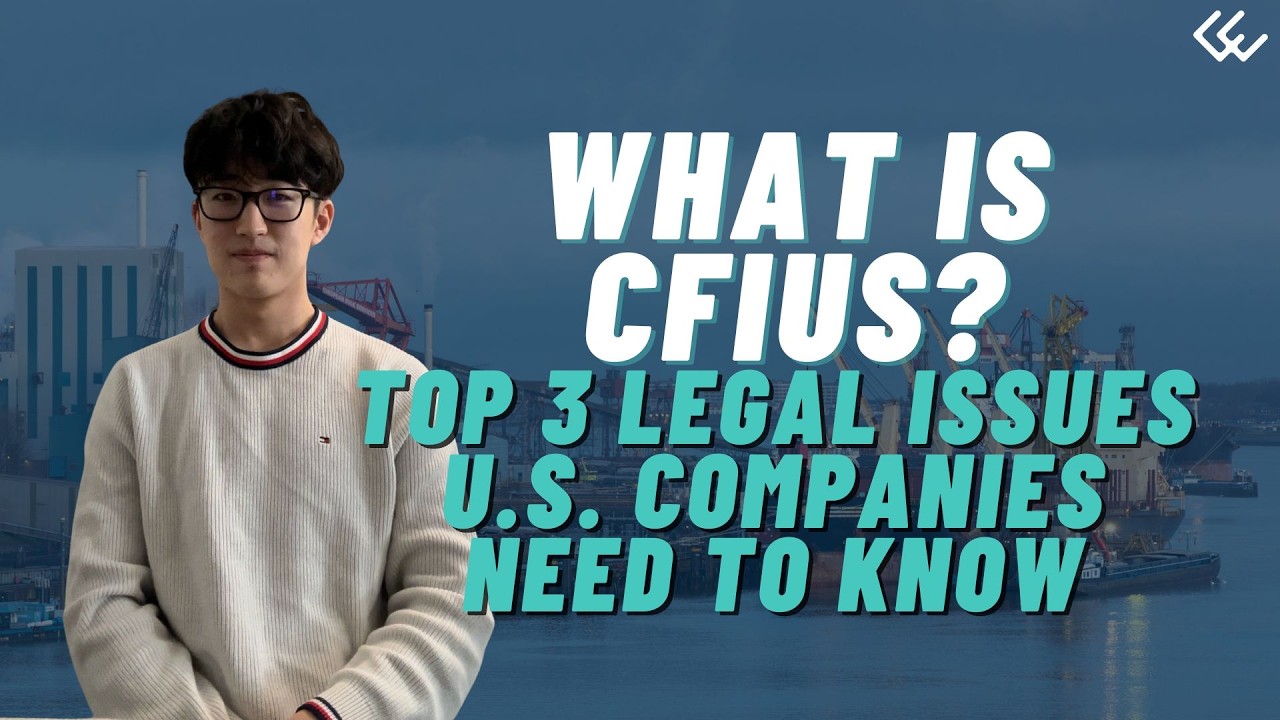
(VIDEO) What is CFIUS? Top 3 Legal Issues U.S. Companies Need to Know
Foreign investment can open doors, but it can also trigger serious legal review. In this video, Brandon explains what the Committee on Foreign Investment in the United States (CFIUS) is and the top three (3) legal issues U.S. companies need to understand before moving forward. Learn what triggers CFIUS jurisdiction, the significance of mandatory filings, and the mitigation measures that may follow. Each step plays a role in your deal's success.
clarkespositolaw
May 18
bottom of page