.png)


Supreme Court Limits Presidential Tariff Authority Under IEEPA: 5 Key Takeaways for Importers

In need of assistance? Schedule an intake meeting with our office.
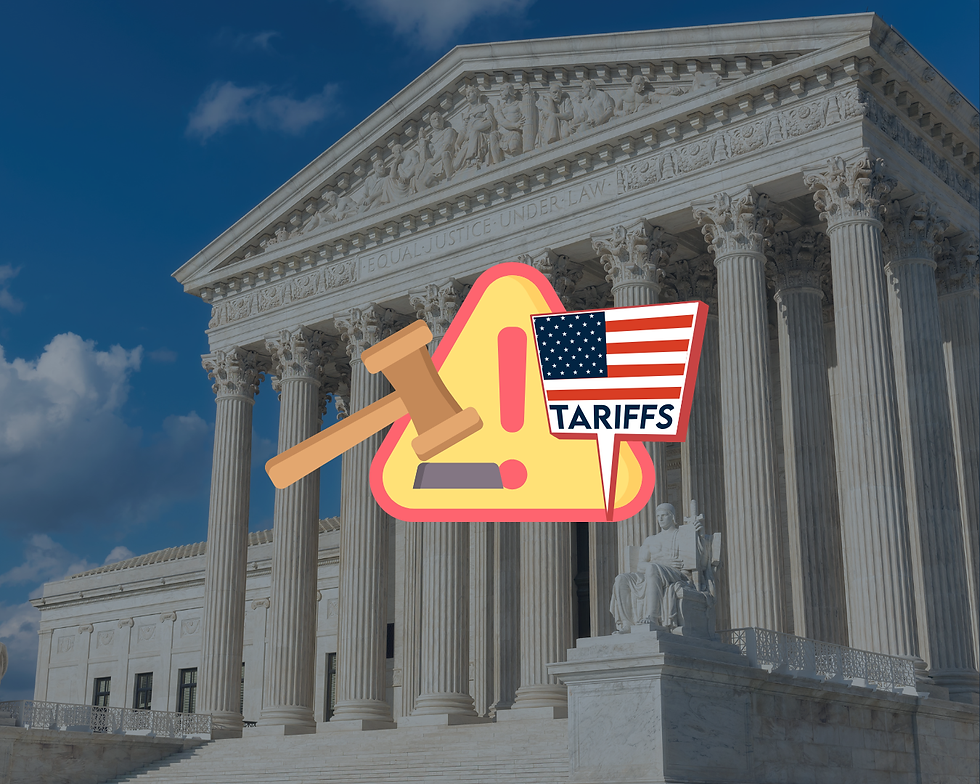
On February 20, 2026, the Supreme Court of the United States issued its decision in Learning Resources, Inc., et al. v. Trump, President of the United States, et al., resolving a major dispute over whether the President could impose tariffs under the International Emergency Economic Powers Act (IEEPA). The Court held that IEEPA does not authorize the President to impose tariffs, rejecting the Administration’s use of emergency powers to support broad tariff measures imposed by the President.
The ruling has immediate and long-term implications for importers, exporters, and companies managing global supply chains. Below are five (5) key takeaways and what importers should consider doing next.
1. IEEPA Does Not Provide Tariff Authority
The Court held that IEEPA’s grant of authority to regulate importation does not include the power to impose tariffs. The opinion emphasized that tariffs are taxes and that the Constitution vests the taxing power in Congress, not the Executive Branch.
Implication: Tariffs imposed solely under IEEPA lack statutory authorization and are subject to legal challenge or invalidation.
2. Congress Retains Primary Control Over Tariff Policy
The Court reaffirmed that Article I of the Constitution gives Congress exclusive authority to impose duties and tariffs. The Executive cannot rely on broadly worded emergency statutes to assume that core legislative power.
Implication: Future tariff regimes will likely require explicit congressional authorization or reliance on existing trade statutes that clearly delegate tariff-setting authority.
3. The “Major Questions” Doctrine Reinforced Limits on Executive Trade Powers
A key part of the Court’s reasoning relied on the “major questions” doctrine, which requires clear congressional authorization for actions of vast economic and political significance. The Court found that granting the President unilateral authority to impose tariffs of unlimited scope, duration, and rate would represent a transformative expansion of executive power.
Implication: Broad tariff actions justified under ambiguous statutory language will face heightened judicial scrutiny.
4. “Regulate Importation” Does Not Mean “Tax Imports”
The Court carefully distinguished between regulating imports and taxing them. While tariffs may have regulatory effects, they are fundamentally revenue-raising measures and therefore a branch of the taxing power. Because IEEPA never expressly mentions tariffs or duties, the Court concluded Congress did not intend to delegate that authority.
Implication: Agencies and administrations must rely on statutes that explicitly reference duties (e.g., Section 301, Section 232, etc.) when implementing tariff-based trade actions.
5. Emergency Powers Do Not Override Constitutional Structure
The Court rejected arguments that national emergencies or foreign affairs concerns justify broader tariff authority under IEEPA. Even in the context of foreign threats, the President must point to clear congressional authorization before imposing tariffs.
Implication: Emergency-based trade restrictions may still be available under IEEPA, but tariffs themselves require separate statutory grounding.
What Can Importers Do Next?
Importers should evaluate whether any tariffs affecting their products were imposed or justified under IEEPA authorities. As the Court’s ruling calls that legal basis into question, companies may face changes in applicable duty rates, ongoing litigation, or potential administrative action revisiting those measures. Understanding the statutory foundation for each applicable tariff will be critical to assessing risk and compliance obligations.
Importers should also consider reviewing past entries where duties were paid under tariff programs potentially affected by the decision. Depending on how agencies and courts implement the ruling, there may be opportunities to pursue protests, refunds, or other administrative remedies. Careful documentation of duty payments and classification decisions will be essential if such opportunities arise.
From a forward-looking perspective, the decision signals that future tariff actions will likely need clearer congressional authorization or reliance on other established trade statutes. As a result, importers should closely monitor legislative developments, agency guidance, and potential shifts to alternative tariff authorities. This evolving landscape may require adjustments to sourcing strategies, pricing models, and long-term supply chain planning.
Finally, the ruling underscores the importance of maintaining a proactive trade compliance framework. Importers should ensure they understand not only the rates applied to their goods but also the legal authorities underpinning those rates. In a period of potential regulatory transition, maintaining flexibility in supplier relationships, conducting periodic tariff exposure reviews, and consulting experienced counsel can help mitigate disruption and position companies to respond quickly as the post-decision policy environment takes shape.
How We Can Help
Our firm assists importers, exporters, and manufacturers in understanding and complying with trade laws and U.S. Customs and Border Protection (CBP) regulations. We can help businesses evaluate how the Supreme Court decision affects their products, tariffs, and supply chains. Have questions? Give our office a call today at (917) 546-6997 or schedule an intake meeting, we would be happy to speak with you.
Ready to Learn More About CBP, OFAC,
BIS, FWS, and FDA?
We have over one hundred videos in our educational library on our YouTube channel related to importing, exporting, US Customs, BIS, OFAC, FWS, FDA, NFTs, and so much more. Subscribe to our channel now to stay up to date on the latest on these topics!
Our law firm helps growing companies who import and export comply with government regulations. We love what we do and we take our oath of confidentiality over your matters very seriously. How much? Watch this video to learn about it. CLICK HERE
Wondering "why should you have an attorney on your side?" Click here to watch one of our attorneys, Susan Steinman, break down the critical benefits as to why you want to have one on your side - whether you hire us to help you or another law firm.
Have questions? We are determined to help you.
We listen carefully to clients to ensure our understanding of the legal issues at hand, their factual context, and any limitations that might impact a chosen strategy. Feel free to connect with us using the contact form at the bottom of the Home page or send us an email at contact@clarkespositolaw.com.


Comments